
You are about to hit send on a message that ends with a warm closing, and your fingers stall over a tiny mark. Should it be yours or your’s? A stray apostrophe looks small, but readers notice it, especially in emails, cover letters, and cards.
Many writers just guess and hope for the best. You do not need to. The yours or your’s question has one clean answer, and a short rule explains it.
What Does “Yours” Mean?
Yours shows that something belongs to the person you are talking to. It stands on its own and replaces a noun, so you do not have to repeat that noun.
Compare these two sentences:
- That is your jacket. (Your is followed by a noun, “jacket.”)
- That jacket is yours. (Yours replaces “your jacket” and stands alone.)
In grammar terms, your is a possessive determiner that sits before a noun, while yours is a possessive pronoun that takes the place of the noun. This one difference explains most of the confusion.
Yours works for one person or for a group. “The decision is yours” is just as correct when you are speaking to a whole team.
Is “Your’s” Ever Correct?
No. In modern standard English, your’s is not an accepted spelling in any context. Dictionaries and style guides list only yours.
You may spot “your’s” in older letters and texts, where spelling and punctuation habits were looser. You will also see it in casual posts and quick messages. Neither fact makes it correct today. In school work, business writing, and publishing, use yours.
A simple way to see the problem: an apostrophe normally signals one of two things, a missing letter or ownership by a noun. “Your’s” does neither job. It would have to mean “your is,” which makes no sense, or “belonging to your,” which is not how English works.
Why Possessive Pronouns Skip the Apostrophe
Here is the rule worth memorizing. Possessive pronouns already show ownership, so they do not need an apostrophe to do it.
Apostrophes show possession on nouns, such as “Maria’s book” or “the dog’s bowl.” Pronouns work differently. They have their own built-in possessive forms, and each one is complete as it stands.
| Pronoun | Possessive pronoun | Example |
| I | mine | The red pen is mine. |
| you | yours | The seat next to me is yours. |
| he | his | The decision is his. |
| she | hers | The idea was hers. |
| we | ours | The house on the corner is ours. |
| they | theirs | The win was theirs. |
Notice that none of these has an apostrophe. If you would never write “her’s” or “our’s,” you should not write “your’s” either. Yours belongs to the same family, and it follows the same rule.
Yours vs Your’s vs Your vs You’re
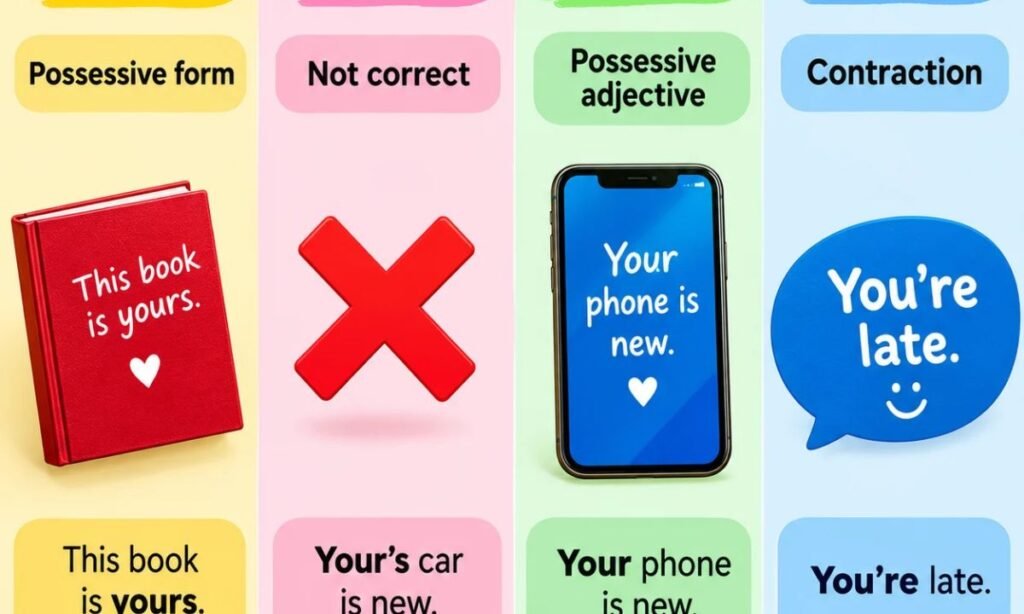
Four look-alike forms cause most apostrophe slips. This table sorts them out.
| Form | Type | Meaning | Example |
| Yours | Possessive pronoun | Belonging to you | The last slice is yours. |
| Your’s | Not a word | Incorrect spelling | Avoid it. |
| Your | Possessive determiner | Belonging to you, before a noun | Please bring your passport. |
| You’re | Contraction | You are | You’re doing great. |
Here is a quick test. If you can replace the word with “you are,” use you’re. If a noun follows the word, use your. If the word stands alone and means “belongs to you,” use yours.
How to Use “Yours” in a Sentence
Seeing the word in real situations makes the rule stick. Here are examples from everyday life.
In conversation
- Is this phone yours or mine?
- I made my choice. Now the choice is yours.
At home
- My keys are on the table. Where are yours?
- The blue towel is mine, and the green one is yours.
At work
- Our report is due Friday. Yours is due Monday.
- Thanks for the draft. I will send mine as soon as I read yours.
At school
- My notes are messy, but yours are perfect.
- Can I borrow a pencil? Mine broke, and yours looks sharp.
Double possessive
- A friend of yours called earlier.
- That habit of yours drives me crazy, in a good way.
The last pair uses a pattern called the double possessive. “A friend of yours” is natural and correct. It is not a typo or a repeat.
Yours Truly, Yours Sincerely: Letter and Email Endings
Sign-offs are where many people hesitate, so this section gives them extra attention.
- Yours truly: A polite, slightly formal closing used in both American and British English.
- Yours sincerely: A formal closing, common in British English when you know the person’s name.
- Yours faithfully: A formal British closing used when you do not know the person’s name.
- Sincerely yours: A common American formal closing.
- Yours: A short, friendly closing for people you know well.
Every one of these uses yours with no apostrophe. “Your’s sincerely” and “Your’s truly” are wrong. In American business writing, Sincerely or Best regards are also popular, and they avoid the question altogether.
Humor note: “yours truly” is also used jokingly to mean “me,” as in “Yours truly forgot the tickets again.”
“I’m Yours” and Other Common Phrases
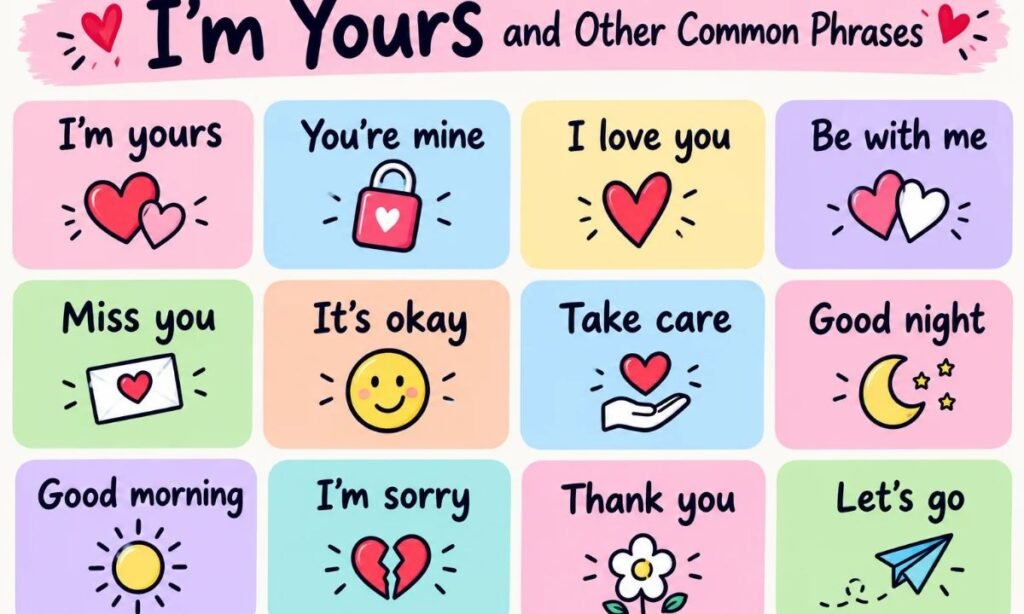
The word appears in many fixed phrases, and the spelling stays the same each time.
- I’m yours. I belong to you, or I am at your service.
- Yours for the taking. Available to you freely.
- What’s mine is yours. I share everything with you.
- Is this seat yours? A simple question about ownership.
- Up to you? It’s yours. Used when someone hands you a decision.
Song titles, cards, and captions follow this rule too. If you want to write “I’m yours” in a message, a tattoo plan, or a wedding card, use no apostrophe. Check it twice, since permanent mistakes are hard to undo.
Why Do People Write “Your’s”?
Most errors have a pattern, and this one has three.
1. Apostrophes feel like the sign of ownership. School teaches that “Tom’s bike” shows possession. Writers then apply that habit to pronouns, where it does not belong.
2. The word sounds incomplete. “Your” sounds like a full word, so “yours” can feel like it needs extra punctuation to look right.
3. Fast typing and autocorrect. On a phone, a quick apostrophe slips in easily, and autocorrect does not always remove it.
Plenty of capable writers have made this mistake. The fix takes one second once you know the rule.
Easy Ways to Remember the Spelling
Choose the trick that fits your brain.
- The family rule: Yours belongs with mine, his, hers, ours, and theirs. None of them uses an apostrophe.
- The swap test: Replace the word with “mine.” If the sentence still works, write yours with no apostrophe. “That seat is mine” works, so “that seat is yours” is correct.
- The expansion test: An apostrophe replaces missing letters. Ask what letters would be missing in “your’s.” There are none, so the apostrophe has no job.
- The noun test: If a noun follows, use your. If nothing follows, use yours.
Common Mistakes to Watch For
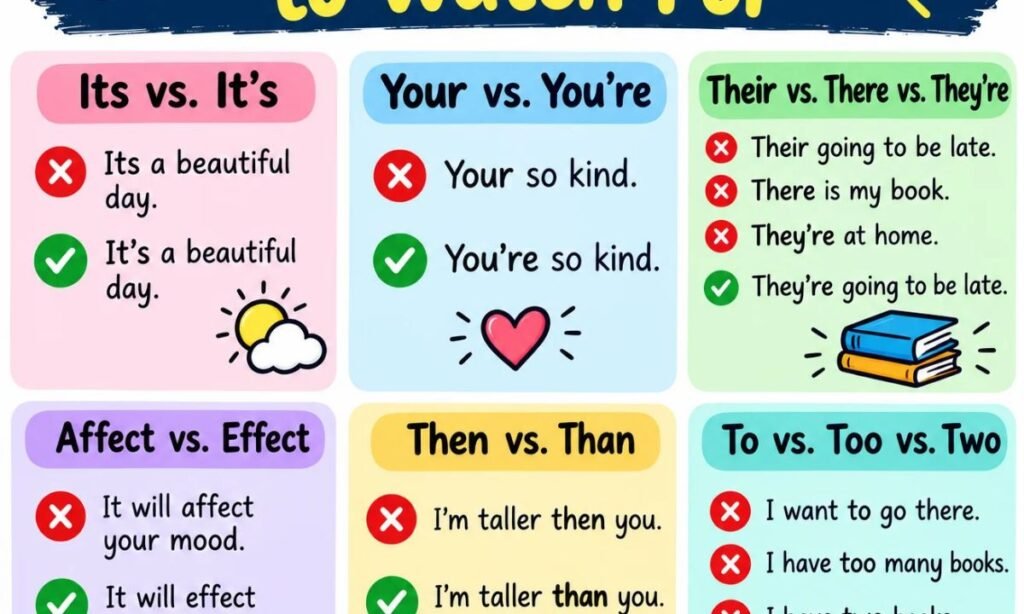
| Wrong | Right |
| your’s | yours |
| Your’s sincerely | Yours sincerely |
| I’m your’s | I’m yours |
| a friend of your’s | a friend of yours |
| her’s, our’s, their’s | hers, ours, theirs |
| yours’ | yours |
| Yours is better then mine | Yours is better than mine |
Also watch for the reverse error, where writers drop a needed apostrophe and write “your welcome” instead of “you’re welcome.” The apostrophe belongs in the contraction you’re, not in the possessive yours.
Frequently Asked Questions
Is it yours or your’s?
It is yours. The form your’s is incorrect in standard English, because possessive pronouns never use an apostrophe to show ownership.
Is it “I’m yours” or “I’m your’s”?
It is I’m yours. The apostrophe appears only in “I’m,” which is a contraction of “I am.” The word yours stays free of punctuation.
Is it “yours sincerely” or “your’s sincerely”?
It is yours sincerely. This formal closing is more common in British English. In American English, sincerely or sincerely yours is the usual choice.
Why doesn’t yours have an apostrophe?
Yours already shows possession through its form, just like mine, hers, ours, and theirs. Apostrophes show possession on nouns, not on pronouns.
Final Thoughts
The yours or your’s debate has a simple winner. Yours is the correct spelling, and it follows a firm rule: possessive pronouns never take an apostrophe. Keep it in the same group as mine, hers, ours, and theirs, and you will not second-guess it again.
Next time you sign off with a warm closing, type it cleanly and hit send. Yours truly will thank you.

Alexander John grammar content writer with 4 years of experience creating accurate, engaging, and SEO-friendly content. I specialize in spelling differences, commonly confused words, vocabulary, grammar rules, and writing tips. My goal is to simplify English for learners through clear explanations, practical examples, and helpful articles.