
You are about to text your partner a birthday message, and your thumbs freeze. “Happy birthday, sweetie” or “sweety”? Both look right, and now a sweet moment feels like a spelling quiz.
The mix-up is easy because the two words sound identical. This guide settles sweetie vs. sweety in plain terms, so your message, card, or caption looks as warm as you meant it to.
What Does Sweetie Mean?
Sweetie is a term of endearment. You use it to address someone you care about, such as a partner, child, close friend, or family member.
It can also describe a person who is kind and lovable. “She’s a real sweetie” means she is a warm, caring person.
Dictionaries also list a few other uses:
- A pet name for someone you love (“Thanks, sweetie.”)
- A kind or likable person (“Your neighbor is such a sweetie.”)
- In British and especially Scottish English, a piece of candy (“a bag of sweeties”)
The tone is soft and friendly. It sounds natural between people who already share a bond.
What Does Sweety Mean?
Sweety carries the same affectionate meaning as sweetie. Nobody will misunderstand you if you write it.
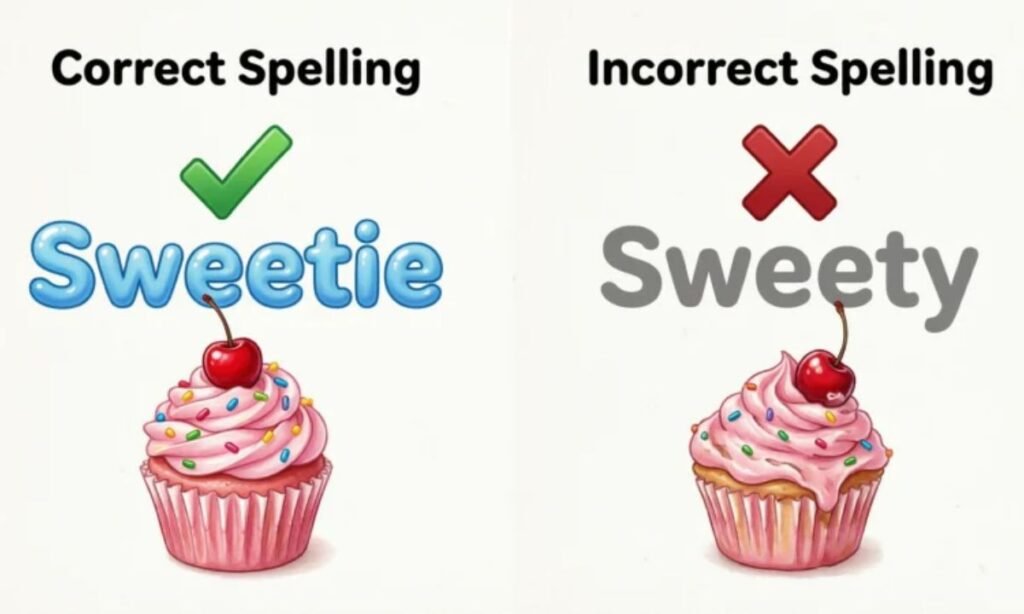
The difference is status, not meaning. Sweetie is the form that dictionaries and style guides list first. Sweety shows up mostly in casual texts, captions, usernames, and social media posts. In some regions, including parts of South Asia, it is also used as a nickname or given name, which helps explain why you see it so often online.
So is sweety “wrong”? In formal or published writing, yes, it looks like a misspelling. In a private chat with a friend, it is harmless.
Sweetie vs. Sweety: Side-by-Side Comparison
| Feature | Sweetie | Sweety |
| Spelling status | Standard | Informal variant |
| Meaning | Loved one, kind person, candy (UK) | Same affectionate meaning |
| Pronunciation | SWEE-tee | SWEE-tee |
| Best for | Cards, emails, books, captions, everything | Casual texts, nicknames, playful posts |
| Plural | Sweeties | Sweeties |
| Looks correct in print? | Yes | Often flagged as a typo |
| Safe choice? | Always | Only in relaxed settings |
Which Spelling Should You Use?
Use sweetie whenever you are unsure. It works in love notes, greeting cards, emails, stories, and social posts. No reader will question it.
Consider sweety only when:
- You are texting a friend who uses it themselves
- It is someone’s actual nickname or name
- You want a deliberately cutesy, playful look in a caption
Here is a simple test. If the message might be printed, framed, shared with strangers, or read by someone who judges spelling, pick sweetie.
How Do You Pronounce Sweetie and Sweety?
Both words are said SWEE-tee. The stress falls on the first syllable, and the last syllable rhymes with “see.”
Because they sound the same, you cannot hear which spelling someone means. That is exactly why the confusion lives in writing and nowhere else. If you wrote the word after hearing it, your brain simply picked one of two plausible endings.
Why Does Sweetie End in “-ie”?
English often adds “-ie” or “-y” to a word to make it smaller, cuter, or more affectionate. You already know many examples: “doggie,” “birdie,” “cutie,” “hottie,” and “foodie.”
Sweetie follows this pattern. It starts with the familiar word “sweet” and adds the friendly “-ie” ending. The result sounds gentle and personal.
“Sweety” uses the other common ending, “-y,” as in “tummy” or “kitty.” Both endings exist in English, so sweety looks believable. Sweetie simply became the form that settled into standard use.
Is Sweetie Used the Same Way in the UK and the US?
Mostly yes, with one fun twist.
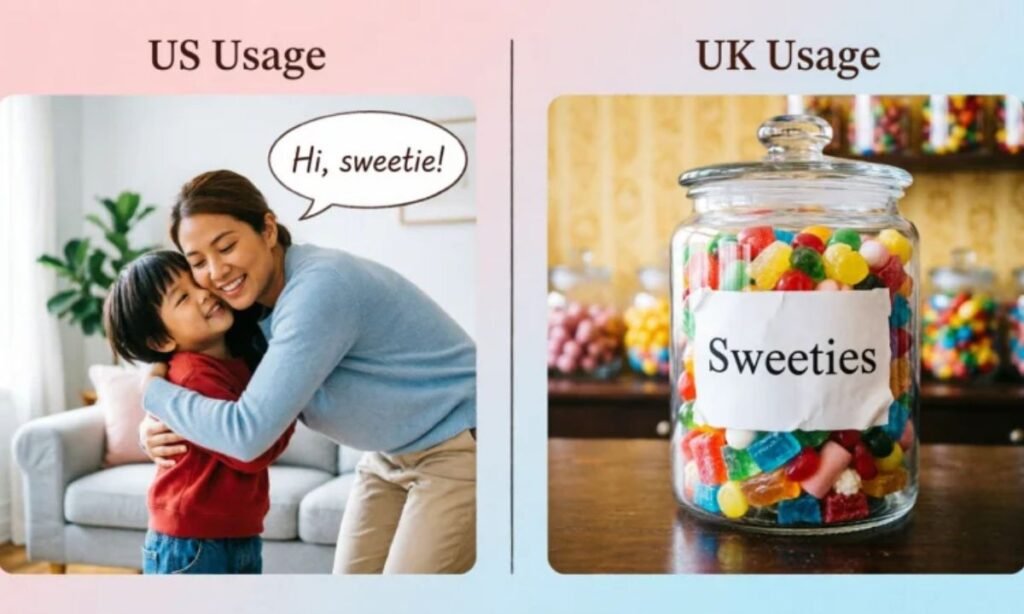
In the US, sweetie is almost always a term of endearment. Parents say it to children. Waitstaff, older relatives, and friends say it too.
In Britain, and especially in Scotland, sweeties can also mean candy. A Scottish grandmother might offer you a sweetie from her handbag. Context makes the meaning clear.
If you write for an international audience, this double meaning can be a pleasant detail or a source of confusion. When it matters, add a clue in the sentence, like “a bag of sweeties from the shop.”
Example Sentences You Can Borrow
Real sentences make the usage easier to remember.
Sweetie as a term of endearment:
- Good morning, sweetie. Did you sleep well?
- Thanks for picking up the groceries, sweetie.
- Don’t worry, sweetie. We’ll figure it out together.
Sweetie describing a kind person:
- The new teacher is a total sweetie.
- Our mail carrier is a sweetie who always waves at the dog.
Sweetie meaning candy (UK):
- The children spent their pocket money on sweeties.
Sweety in casual texting (informal):
- Heading home now, sweety. Want me to grab dinner?
Notice that the last sentence works fine in a private text. It just would not look polished on a printed invitation.
Who Can You Call Sweetie?
Plenty of people use the word, but not every relationship fits it.
- Partners and spouses: Very common and welcome.
- Children and grandchildren: One of the most typical uses.
- Close friends: Fine if you are already warm with each other.
- Men and boys: Yes. The word is not limited to women. Calling a guy “sweetie” is normal between partners, family members, and friends. It simply depends on your relationship and tone.
- Acquaintances and strangers: Be careful. Some people hear it as friendly, others as patronizing.
The word does not belong to any one gender. What matters is closeness and consent, not who the person is.
When Should You Avoid Pet Names Like Sweetie?

A warm word can land badly in the wrong setting. Skip it when:
- At work: Calling a coworker, client, or employee “sweetie” can sound dismissive or inappropriate, even when you mean well.
- With someone who dislikes it: If a person asks you to stop, stop.
- In formal writing: Business letters, essays, and official emails call for a person’s name instead.
- With people you barely know: A stranger may read it as too familiar.
If you are not sure, use the person’s name. Names never offend anyone.
Common Mistakes to Avoid
Writing “sweatie.” This one is a straight spelling error. “Sweat” means perspiration, and “sweaty” means covered in sweat. “Sweatie” is a mix of the two and not a standard word. If you mean the affectionate one, you want sweetie, with two e’s.
Choosing sweety for formal writing. It may get flagged by editors and spell checkers. Stick with sweetie in anything you publish or print.
Mixing both spellings in the same message. Pick one form and keep it consistent, especially in a letter, caption, or story.
Forgetting the plural. The plural of sweetie is sweeties, not “sweeties'” or “sweeties’s.” Use the apostrophe only for possession, as in “my sweetie’s phone.”
Using the term in the wrong setting. Correct spelling will not save a pet name that feels out of place. Check the relationship first.
FAQs
Is it sweetie or sweety?
It is sweetie in standard English. Sweety appears as an informal variant, but it is not the form most dictionaries and style guides prefer.
Can you call a guy sweetie?
Yes. Sweetie is not limited to women. People use it for partners, sons, friends, and relatives of any gender. Just make sure the person is comfortable with the nickname.
What does sweetie mean for a girl?
When used for a girl or woman, sweetie is an affectionate way to address her or to describe her as kind and lovable. The meaning is the same as for anyone else. Tone and relationship decide whether it feels sweet or condescending.
What does sweety mean?
Sweety means the same as sweetie: a term of endearment or a kind person. It is simply a less standard spelling, more common in informal writing and nicknames.
Conclusion
The sweetie vs. sweety question has a short answer. Sweetie is the correct, standard spelling, and it is the safe choice for any message, card, or caption. Sweety means the same thing but reads as informal, so keep it for casual chats where nobody is grading spelling.
Remember the “-ie” ending that works like “cutie” and “foodie,” pick your moment, and let the word do its job: sounding kind.
Pingback: Outting or Outing: Which Spelling Is Correct?