
You finish a heartfelt thank-you note that says, “It was a privilege to work with you.” Then you stop. Does that word have a d in it? The privilege or priviledge puzzle sneaks up on smart people, mostly because the word sounds like it should have one.
A misspelling in a farewell note, cover letter, or speech is a bit awkward. Luckily, the fix is simple, and once you see the pattern, you won’t second-guess it again.
What Does Privilege Mean?
Privilege is mainly a noun. It describes something special that a person gets, often because of their position, status, or circumstances.
The word has a few connected meanings:
- A special right or advantage. Example: “Seniors get the privilege of choosing their seats first.”
- An honor or opportunity. Example: “It was a privilege to meet her.”
- A legal protection. Example: “Attorney-client privilege keeps those conversations confidential.”
- An unearned advantage in society. Example: “They talked about how privilege shapes access to education.”
Notice the tone shifts depending on the meaning. In a thank-you note, privilege sounds warm and humble. In a legal setting, it sounds precise and technical.
Is Priviledge a Word?
No. Priviledge is not a word in standard English. Every major dictionary lists only privilege, and word processors will flag the version with a d.
Some people insist it looks right, and that is worth understanding. The mistake feels natural, and we’ll look at why in a moment. But natural does not mean correct, and readers will notice the extra letter in formal writing.
Privilege vs Priviledge at a Glance

| Feature | Privilege | Priviledge |
| Status | Correct standard spelling | Misspelling |
| Contains a d | No | Yes (wrongly) |
| Part of speech | Noun, verb | Not recognized |
| Accepted in dictionaries | Yes | No |
| Same in US, UK, and Australia | Yes | Not used anywhere |
| Example | “Voting is a privilege and a right.” | “Voting is a priviledge.” (wrong) |
Where the Word Comes From
The spelling makes more sense once you know the history. Privilege comes from the Latin word privilegium, which referred to a law that applied to one person rather than to everyone. It combines privus, meaning “private” or “individual,” with lex, meaning “law.”
That origin explains the meaning. A privilege was originally a private law, a special rule for one person or group. You can still hear that idea today when we say someone has “special rights.”
There is no d anywhere in the Latin, so there is no d in the English word. The ending -lege comes straight from lex.
Why People Add the D
If the Latin has no d, why does the mistake happen so often? Several things push writers in that direction.
The sound is misleading. In speech, the ending sounds like “-ij,” and a soft j sound is often spelled dge in English, as in “edge” or “bridge.”
Familiar patterns take over. Words like pledge, ledge, and judge all use dge. Your brain matches “privilege” to that group without asking permission.
The word is long. Longer words invite spelling guesses, especially in the middle syllables.
Typing habits. Writers who often type “knowledge” or “acknowledge” may carry the d over on autopilot.
So the error is understandable. It just doesn’t match the actual word.
How to Spell Privilege Correctly

PRIV + I + LEGE
Then keep these points in mind:
- The last four letters are l-e-g-e, not “ledge.”
- There is only one d in the whole phrase “privilege or priviledge,” and it belongs to “or” in nobody’s spelling. In privilege itself, the count is zero.
- The word rhymes in spelling with college and sacrilege, which also end in -lege.
A quick memory trick: think of “a privilege at college.” Both words end in -lege, and neither has a d.
Privilege in Legal and Formal Contexts
- Attorney-client privilege: protects private communication between a lawyer and client.
- Executive privilege: allows certain government leaders to keep some information confidential.
- Privileged information: details that are protected or shared only with limited people.
- Privileged access: special permission in a computer system, such as an administrator account.
In each case, the spelling is the same, and a misspelling can undermine an otherwise professional document. If you work in law, IT, or business, this is a spelling to lock down early.
Privilege as a Verb and Adjective
| Form | Example |
| Noun: privilege | “Driving is a privilege.” |
| Adjective: privileged | “She grew up in a privileged neighborhood.” |
| Verb: to privilege | “The school privileges test scores over creativity.” |
| Verb, past tense: privileged | “The system privileged older users.” |
Every form keeps the same spelling. Notice that “privileged” does not add a d to the middle. It only adds “-d” at the end, and the middle stays the same.
Example Sentences Using Privilege
Gratitude and honor
- “It was a privilege to speak at the ceremony.”
- “I feel privileged to have such supportive coworkers.”
Rights and rules
- “Library members have the privilege of borrowing ten books.”
- “Parking in the front lot is a privilege for staff only.”
Law and business
- “The lawyer asserted attorney-client privilege.”
- “Only users with privileged access can change these settings.”
Social conversation
- “Talking about privilege often starts with noticing who has easier access to opportunities.”
Does Spelling Change in the UK or Australia?
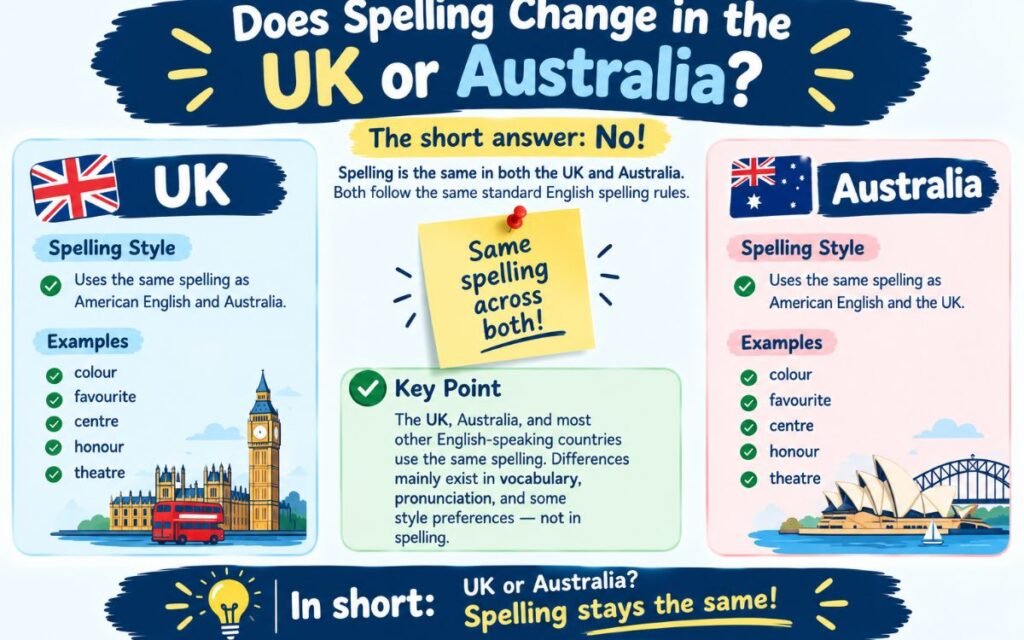
No. Privilege is spelled the same way in American, British, and Australian English. Unlike words such as color and colour, this word has no regional variation.
That is good news for anyone writing for an international audience. You don’t need to switch spellings based on the reader’s location. The only thing to remember is to leave out the d everywhere.
Mistakes to Avoid
- Writing priviledge. The extra d is the most frequent slip.
- Writing privelege. Swapping the middle i for an e is another common variation.
- Writing priveledge. This one mixes both errors.
- Confusing privilege with right. A right is guaranteed. A privilege can be given or taken away.
- Trusting only your ear. The sound does not show the spelling, so check the word when it matters.
If you proofread other people’s writing, a quick search for “priviledge” can catch errors in seconds.
Privilege vs Right: What Is the Difference?
A right is something you are entitled to, often protected by law. A privilege is a benefit that is granted and can be limited or removed.
For example, free speech is commonly described as a right. Using a company car is a privilege. Some people also use “privilege” in a social sense, meaning advantages that some groups receive without earning them. Context tells you which meaning is intended.
Frequently Asked Questions
Is there a d in privilege?
No. Privilege has no d. The ending is spelled -lege, like college, not -ledge.
How do you spell privilege in the UK?
It is spelled privilege in the UK, exactly as in the US. British English does not use a different spelling for this word.
What is the exact meaning of privilege?
Privilege means a special right, advantage, or benefit granted to a person or group. It can also mean an honor, as in “It was a privilege to help.”
How do you spell privilege in Australia?
Australian English also uses privilege. There is no regional variation, so the spelling stays the same in all major English-speaking countries.
Conclusion
The privilege or priviledge question has a clear winner. Privilege is the correct spelling everywhere English is used, and priviledge is a misspelling that comes from mixing the word up with pledge, ledge, and judge. The word traces back to Latin, where it meant a private law, and no d ever appeared.
Remember the college trick, and you will get it right every time. Whether you are writing a thank-you note, a legal memo, or a school essay, spell it privilege, and your writing will look careful and confident.