
You are halfway through a resume, the cursor blinks, and suddenly a word looks wrong. Was it career or carrer? This Carrer vs Career mix-up trips up students, job seekers, and fast typists every day. Worse, typos slip into PDFs, usernames, and email subject lines where no red underline saves you, and one slip can make a hiring manager pause. Good news: the fix takes about two minutes. Here is the right spelling, the reason it works, and simple tricks to lock it in.
What Does “Career” Mean?
A career is the path of work and learning a person follows over a long period. It usually covers several jobs, roles, or employers, tied together by a field, a skill set, or a goal.
Think of a job as one stop and a career as the whole road trip. A person might work as a barista, then a shift lead, then a restaurant manager. Those are three jobs, but one career in hospitality.
The word also has a few other uses:
- Noun (work life): “She built a long career in nursing.”
- Adjective: “He is a career firefighter.”
- Verb (to rush): “The truck careered down the hill.”
The word comes from the French carrière and the Italian carriera, which referred to a road or a racecourse. That origin still shows up today when we say someone is “on a career track.” It is a fitting image for a word about moving forward.
Is “Carrer” a Real Word in English?

No. “Carrer” does not appear in standard English dictionaries. It is a typing slip or a spelling guess that drops one e from “career” and adds a second r.
There is one wrinkle worth knowing. Carrer is a real word in Catalan, where it means “street.” So if you see it on a map of Barcelona, it is correct there. In an English sentence about jobs and professions, it is always wrong.
Carrer vs Career at a Glance
| Feature | Career | Carrer |
| Correct in English | Yes | No |
| Spelling | c-a-r-e-e-r | c-a-r-r-e-r |
| Part of speech | Noun, adjective, verb | None in English |
| Meaning | A long-term path of work and growth | Catalan word for “street” |
| Safe for resumes and essays | Yes | No |
| Example | “I want a career in design.” | Not used in English |
The difference comes down to one swapped letter. “Career” has two e’s side by side. “Carrer” has two r’s side by side. Your eyes can easily skip over that swap when you read quickly.
Why People Misspell Career
The error is common because the word is hard to spell by sound alone. Here are the main reasons it happens.
Double letters feel random. English has plenty of doubled letters, and nothing tells you which one gets doubled. Writers often guess “rr” because words like “carry,” “carrot,” and “carriage” have it.
Fast typing swaps neighboring keys. On a keyboard, the “e” and “r” sit right next to each other. A quick finger can hit them in the wrong order or skip one.
Pronunciation hides the spelling. Most people say kuh-REER. The stressed “eer” sound does not show clearly that there are two e’s.
Similar words pull the spelling off course. “Carrier,” “carry,” and “career” look alike, so the brain blends them.
Proofreading skips familiar words. You see what you meant to type, not what you typed. That is why the error survives in finished resumes.
Easy Ways to Remember the Spelling
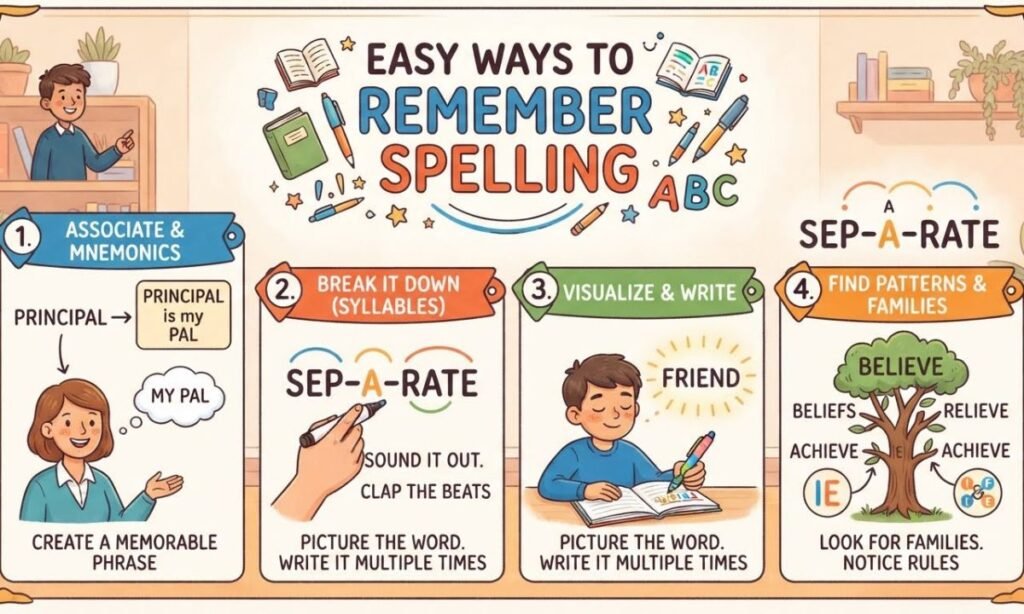
A few memory tricks work better than rereading the word ten times.
- Two e’s, one r at the end. Say it out loud: “c-a-r-EE-r.”
- Spot the hidden word. Inside “career” you can find care. A good career is something you care about.
- Picture the double e as two eyes. You keep your eyes on your career goals.
- Pair it with its cousin. “Career” and “degree” both have a double e. Learn them as a set.
- Type it five times without looking. Muscle memory helps more than you might expect.
Quick self-check: Which one is right, “carrer counseling” or “career counseling”? If you said the second, you are set.
How Career Works as a Noun, Adjective, and Verb
Most people only use “career” as a noun, but it has a few forms.
Noun: the long path of your work life. “He spent his entire career in public health.”
Adjective: describes someone who does a job as a lifelong profession. “She is a career diplomat.”
Verb: to move fast and with little control. “The cart careered across the parking lot.”
The verb form is less common and is often confused with careen. Both appear in published writing for out-of-control movement, though some style guides prefer “careen.” In the job sense, “career” is always a noun or adjective.
Related forms to know: careers, careered, careering, careerist.
Career Example Sentences for Real Life
Seeing the word in context helps it stick.
On a resume or cover letter
- “I am seeking a career in data analysis.”
- “My career goals include moving into project management.”
In school or academic writing
- “The essay explores how education shapes career outcomes.”
- “Students can visit the counseling office for career advice.”
On LinkedIn
- “Passionate about career development and mentoring early professionals.”
- “Open to new career opportunities in logistics.”
In everyday conversation
- “She changed careers at 35 and never looked back.”
- “My dad had a long career as a mechanic.”
Incorrect versions to avoid
- “I’m looking for a carrer in marketing.” (wrong)
- “She has an exciting carrer ahead.” (wrong)
Why One Small Typo Can Matter
Most readers forgive a typo in a text message. A resume or application is different, because it works as your first impression.
A misspelled “career” is especially noticeable because the word often sits in a headline, an objective statement, or a LinkedIn summary. That is the first thing a reader sees. A hiring manager has no way of knowing whether you rushed or simply do not know the spelling, so a small mistake can raise doubts about attention to detail.
These are the places where the spelling matters most:
- Resume headers and objective statements
- Cover letters and application forms
- LinkedIn headlines and “About” sections
- Email subject lines such as “Career Inquiry”
- School essays, scholarship applications, and personal statements
- Business cards, portfolios, and website pages
The good news is that this is one of the easiest errors to fix. One careful read-through usually catches it.
Several look-alike words cause spelling and meaning mix-ups.
| Word | Meaning | Example |
| Career | Long-term work path | “A career in teaching” |
| Carrier | A person or company that carries something | “A mail carrier” |
| Carer | A person who looks after others (common in British English) | “She works as a carer.” |
| Careen | To lurch or swerve | “The bus careened around the curve.” |
| Carrer | Not an English word | Avoid |
Other misspellings you may see include carreer, careir, and carear. All are incorrect.
American vs British English: “Career” is spelled the same in both. There is no regional variant, so you never need to change it for a different audience.
Career Terms Worth Knowing
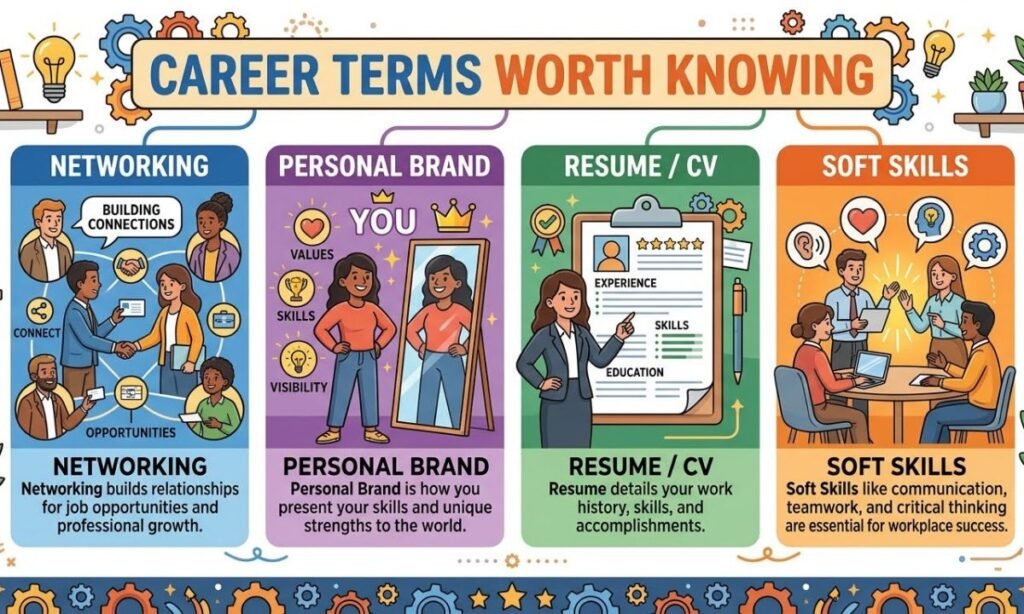
Once you have the spelling down, these related terms come up often in job searches and school work.
- Career path: the series of roles you move through in a field.
- Career development: the ongoing process of building skills and experience.
- Career growth: advancement in responsibility, pay, or expertise.
- Career goals: the specific outcomes you want from your working life.
- Career planning: mapping the steps to reach those goals.
- Career counseling: guidance from a trained professional on choices and direction.
- Career advice: informal tips from mentors, managers, or experienced peers.
- Career opportunities: open roles that could advance your path.
- Career change: a shift into a different field, not just a new employer.
Spell-check each of these before you hit send. They are the phrases most likely to show up in a resume, an application, or a professional profile.
How to Catch the Mistake Before You Hit Send
Spell checkers flag “carrer” in most word processors, but not every place you type has one. Use this short routine for anything important:
- Read it slowly, out loud. Your ear catches what your eye skips.
- Search the document. Use Ctrl+F (or Cmd+F) to look for “carrer” and fix every match.
- Check titles and headers first. These are the spots people proofread least.
- Run a grammar tool. It helps, but do not rely on it alone.
- Ask a second reader. A fresh set of eyes spots errors you have gone blind to.
Mini Quiz: Carrer vs Career
Test yourself. Answers are at the end.
- Which is correct: carrer or career?
- Fill in the blank: “She wants a long ______ in medicine.”
- True or false: “Carrer” is an accepted American English spelling.
- Which word means “a person who carries mail”: career or carrier?
- Choose the correct phrase: “career counseling” or “carrer counseling.”
Answers: 1) career, 2) career, 3) False, 4) carrier, 5) career counseling.
FAQs
Is “carrer” a real word?
No. “Carrer” is not an English word. It is a misspelling of “career.” In Catalan, “carrer” means “street,” but that has nothing to do with jobs or professions.
Which spelling is correct for jobs and professions?
Career is correct. It has two e’s in the middle and one r at the end: c-a-r-e-e-r.
Why do people type “carrer” instead of “career”?
The most common causes are fast typing, since the “e” and “r” keys sit next to each other, and confusion with words like “carry” and “carrier.” The way the word sounds also does not show which letters are doubled.
Can spelling mistakes affect job applications?
Yes, they can. A typo in a resume or cover letter may make a reader question your attention to detail. It will not always cost you the job, but it is an easy mistake to avoid with a careful proofread.
How can I remember the correct spelling of career?
Think of the hidden word “care” and the double “ee” in the middle. You can also learn it alongside “degree,” which has the same double e. Typing the word a few times from memory also helps.
Conclusion
The Carrer vs Career question has a simple answer: career is correct, and “carrer” is only a typo. Keep the double e in mind, remember the hidden word “care,” and give your resume or profile one slow read before you send it. A single letter is a small thing to fix, and getting it right keeps the focus on your skills instead of your spelling.
Pingback: IDC Meaning in Text: What Does IDC Stand For?