
Your boss asks for a quick note confirming the payment was moved to the new account. You type “The funds were transfered” and hit send. Then a nagging voice wonders whether that second r belongs there. Spell check may catch it, or it may not, and a typo in a financial email looks sloppy. The transferred vs transfered question comes up constantly, and there is a simple rule behind it. Learn it once, and you will spell this word and dozens like it correctly.
Transferred vs Transfered: Side-by-Side
| Feature | Transferred | Transfered |
| Correct in standard English | Yes | No |
| Used in US English | Yes | No |
| Used in UK English | Yes | No |
| Past tense of “transfer” | Yes | No |
| Past participle of “transfer” | Yes | No |
| Safe for professional writing | Yes | No |
There is no region where “transfered” is accepted. American and British dictionaries agree on transferred.
Why Transferred Has Two R’s
English has a spelling rule for adding endings like -ed, -ing, and -er to verbs. You double the final consonant when all three conditions are true:
- The word ends in one vowel followed by one consonant.
- The word has more than one syllable.
- The stress falls on the last syllable.
Check “transfer” against the rule:
- It ends in the vowel “e” plus the consonant “r.” Yes.
- It has two syllables (trans-fer). Yes.
- The verb is stressed on the second syllable: trans-FER. Yes.
All three conditions are met, so the “r” doubles. Transfer becomes transferred and transferring.
Doubling also protects the sound. A single “r” in “transfered” would suggest the vowel before it is a different sound. The second “r” keeps the stressed syllable short and crisp.
All the Forms of Transfer
| Form | Spelling | Example |
| Base verb | transfer | I will transfer the files today. |
| Third person | transfers | She transfers money every Friday. |
| Past tense | transferred | He transferred to a new school. |
| Past participle | transferred | The data has been transferred. |
| Present participle | transferring | We are transferring the call now. |
| Agent noun | transferor / transferee | The transferee signed the form. |
The past tense and the past participle share one spelling, so you never have to choose between two forms. Both are transferred.
What Does Transferred Mean?

To transfer something is to move it from one person, place, account, or group to another. Transferred is the past form of that action. It covers a wide range of situations:
- Money: funds moved between bank accounts
- Work: an employee moved to a different office or department
- School: a student who changed schools or programs
- Ownership: a house, car, or license passed to a new owner
- Data: files moved from one device to another
- Calls: a phone call sent to a different person
In every case, something or someone changes location, owner, or status.
Transferred in Sentences
Seeing the word in real sentences helps the spelling feel normal.
Money and business
- The bank transferred the money within one business day.
- Ownership of the property was transferred last month.
Work
- She was transferred to the Denver office in March.
- My manager transferred the project to another team.
School
- He transferred from a community college to a state university.
Technology
- All the photos were transferred to the new phone.
Everyday life
- The receptionist transferred my call to billing.
Notice the common pairings: transferred to, transferred from, and transferred between.
Words That Follow the Same Pattern
Transferred is not a special case. Many verbs with stress on the last syllable double their final consonant:
- refer, referred
- prefer, preferred
- occur, occurred
- confer, conferred
- defer, deferred
- infer, inferred
- admit, admitted
- commit, committed
Now compare verbs where the stress is not on the last syllable. These do not double:
- offer, offered (OF-fer)
- suffer, suffered (SUF-fer)
- differ, differed (DIF-fer)
- enter, entered (EN-ter)
- gather, gathered (GATH-er)
If you can hear where the stress lands, you can predict the spelling. Say the word aloud: if your voice pushes on the last syllable, double the consonant.
The Exceptions: Transferable and Transference
Here is where many guides stop short. Some related words use a single r, and that is correct:
- Transference (stress shifts to the first syllable: TRANS-fer-ence)
- Transferable (TRANS-fer-a-ble, though “transferrable” also appears as a variant in some dictionaries)
When the stress moves away from the last syllable of the root, the doubling often disappears. The same shift explains why “refer” becomes “reference” and “prefer” becomes “preference.”
So “transfered” is wrong, but “transference” is right. The difference is not random. It comes straight from the stress rule.
British vs American English
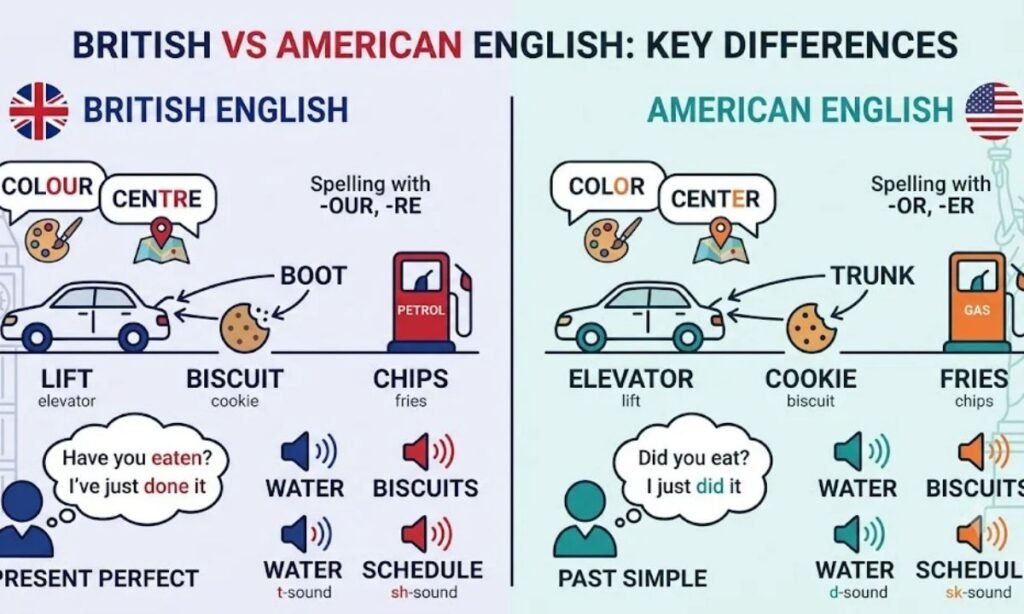
Writers often wonder whether the spelling changes between regions. It does not.
Some words do differ. British English often doubles an “l” where American English does not (travelled vs traveled, cancelled vs canceled). That pattern affects words ending in “l,” not words ending in “r.”
For this word, both varieties use transferred. If you have seen “transfered” in a UK document, it was a typo, not a regional spelling.
Pronunciation: Noun vs Verb
The word “transfer” is a small lesson in stress.
- As a noun, the stress falls on the first syllable: a TRANS-fer (as in “a bus transfer”).
- As a verb, the stress falls on the second syllable: to trans-FER.
Transferred is a verb form, so it is pronounced trans-FURD, with the stress on the middle syllable. Because the verb stress is on the last syllable of the root, you double the “r.”
A common slip happens when writers think of the noun (TRANS-fer) and then attach “-ed” without doubling. Remember that the past tense follows the verb, not the noun.
Why People Write “Transfered”
Three habits explain most of the mistakes:
- Spelling by sound. In speech, the doubled “r” is not heard as two separate sounds, so the second one feels optional.
- Habit from simple verbs. Most verbs just add “-ed” (walk, walked). Writers apply that default without checking the stress.
- Typing speed. A skipped letter is easy to miss when you type quickly and your eyes read what you meant, not what you wrote.
Spell check usually catches “transfered,” but not always. In rushed messages, forms, and resumes, it can slip through.
How to Remember the Spelling
Try one of these:
- Stress test. Say “trans-FER.” If your voice lands on the last syllable, double the “r.”
- Group it with its family. Transferred, referred, preferred, occurred. Learn them as one set instead of one by one.
- Think of two-way traffic. Something is moving from one place to another, so the word gets two r’s.
- Check the ending. Words that end in -erred (transferred, preferred, referred) are far more common than words that end in -ered after a stressed syllable.
- Type it correctly five times. Muscle memory helps more than people expect.
Common Mistakes With Transferred

- Dropping the second “r.” Writing “transfered” instead of “transferred.”
- Doubling in the wrong place. Writing “transferring” as “transfering” has the same error. The correct form is transferring.
- Writing “transferrable” in a formal setting without checking. Both forms appear in dictionaries, but “transferable” is the safer, more common choice.
- Using the wrong preposition. You are transferred to a place and from another. “Transferred out of” is also correct when you describe leaving a department or facility.
- Mixing noun and verb. “I need a transfered” is wrong in two ways. The noun is simply “a transfer.”
Frequently Asked Questions
Is transfered ever correct?
No. “Transfered” is not an accepted spelling in standard American or British English. The correct past tense is transferred.
Does transferred have one R or two?
It has two r’s in the middle: trans-fer-r-ed. The final “r” of “transfer” doubles before “-ed.”
What is the past tense of transfer?
The past tense and past participle are both transferred. The present participle is transferring.
Is “transferred out of” spelled correctly?
Yes. “Transferred out of” is correct and common, for example: “She was transferred out of the emergency department.” The spelling of the main word stays the same.
How do you spell transferred in British English?
The same way: transferred. British and American English agree on this word.
Conclusion
The transferred vs transfered debate has a clear winner: transferred. The final “r” doubles because the verb “transfer” is stressed on its last syllable, the same reason you write referred, preferred, and occurred.
Learn the stress rule once, and you will fix not only this word but dozens of others. Say the word aloud, listen for the stress, and your spelling will follow.