
You are about to print 500 copies of an event handout. Your designer typed “flyer,” your editor changed it to “flier,” and now you are stuck in the middle. The flier vs flyer question trips up marketers, students, and writers every week, and a wrong guess feels awkward in front of a client. The good news is that the answer is simple. Here is which spelling to use, when, and why.
What Does Flier Mean?
Flier is the older, dictionary-first spelling. It has two main meanings:
- A person or thing that flies, such as a pilot, a passenger, or a bird.
- A printed handout used to advertise an event, product, or service.
Merriam-Webster lists “flier” as the main entry and “flyer” as a variant. The Associated Press Stylebook also leans toward “flier,” which is why many newsrooms and publishers still use it.
Example sentences:
- The airline gave every frequent flier a free upgrade.
- She is a nervous flier, so she always books an aisle seat.
- A volunteer slid a flier under every door on the block.
What Does Flyer Mean?
Flyer carries the same meanings, but it has become the favorite in everyday use. When people think of a paper handout for a yard sale, a gym opening, or a school concert, they usually picture the word “flyer.”
You will see it most in:
- Advertising and promotions
- Graphic design and print shops
- Small business marketing
- Community events and school notices
Example sentences:
- The bakery printed 300 flyers for its grand opening.
- He designed a bright flyer for the charity run.
- A flyer on the bulletin board caught her eye.
Flier vs Flyer: Side-by-Side Comparison
| Feature | Flier | Flyer |
| Meaning (person who flies) | Yes | Yes |
| Meaning (printed handout) | Yes | Yes |
| Dictionary position | Often listed first | Often listed as a variant |
| Style guide preference | AP and Chicago lean toward it | Accepted, but rarely the preferred form |
| Common in marketing | Less common | Very common |
| Best for | News, formal publishing, academic writing | Business, design, casual and promotional writing |
| Considered incorrect? | No | No |
The table shows the main point: the meaning does not change, only the style preference does.
Why Do Both Spellings Exist?
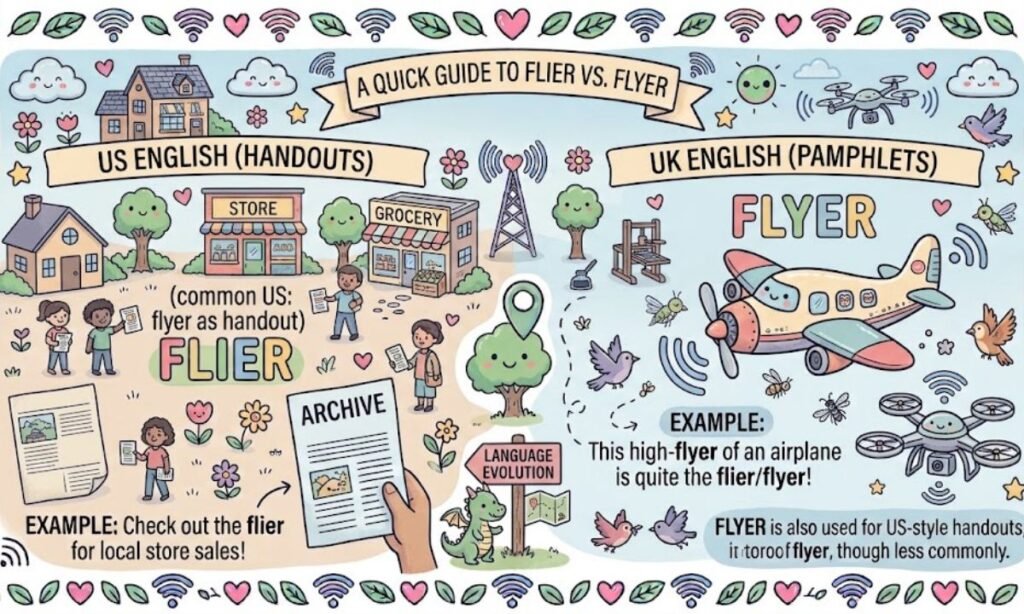
English has never been tidy about spelling. The word comes from the verb “fly” plus the ending “-er,” so “flyer” follows the pattern directly. “Flier” appeared as an alternative, similar to how “dryer” and “drier” or “shyer” and “shier” both exist.
Over time, both forms stuck around because writers kept using both. Printers and advertisers favored “flyer” because it looks closer to the root word “fly.” Dictionary editors and newspaper stylists kept “flier” because it was already listed and became the official form in their guides.
So neither spelling is a mistake or a modern invention. They are two accepted paths from the same word.
What Do Dictionaries and Style Guides Recommend?
If you write for an editor, a publisher, or a school, the style guide decides. Here is the general picture:
- Merriam-Webster: Lists “flier” first and “flyer” as a variant.
- AP Stylebook: Prefers “flier” for both the person and the handout, with exceptions for proper names.
- Chicago Manual of Style: Follows Merriam-Webster, so it leans toward “flier.”
- Oxford dictionaries: Recognize both forms, and “flyer” is especially common in British usage for a leaflet.
Style guides update over time, so check the latest edition if you write for a publication with strict rules. If you have no style guide, the practical recommendation is simple: choose the spelling your audience expects, then stick with it.
Flier vs Flyer in American and British English
Both spellings are used in both countries, so this is not a classic “color vs colour” split. Still, some habits are visible:
- American English: “Flyer” is very common for ads and event handouts. “Flier” appears more in news writing and formal publishing.
- British English: “Flyer” is common for both a promotional leaflet and a person who flies. “Flier” is also accepted, but you will see it a bit less in casual writing.
If you are not sure which audience will read your work, use the form your own team already uses and keep it consistent.
How to Choose Between Flier and Flyer
Use this quick decision guide.
Choose flier when:
- You follow AP or Chicago style.
- You write news, academic, or formal publishing content.
- Your editor or client asks for dictionary-first spelling.
Choose flyer when:
- You write marketing copy, social posts, or small business content.
- You work in design, printing, or event promotion.
- Your readers are more likely to search or say “flyer.”
Either one works when:
- No style guide applies.
- You are writing a personal note, a casual blog, or a school assignment with no set rule.
Just never mix them in the same piece of writing.
Proper Names and Fixed Terms
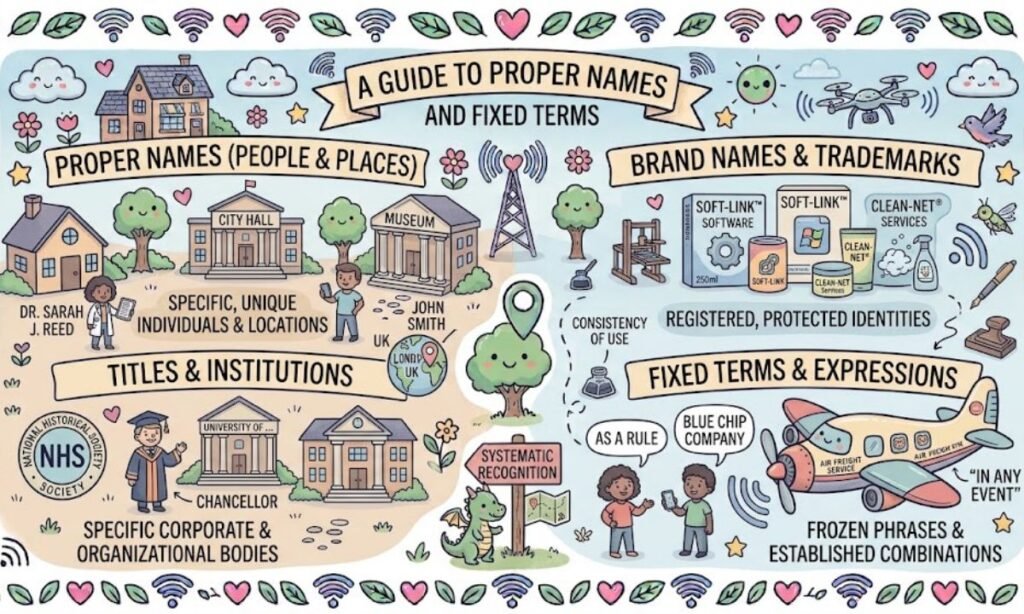
Here is something many guides skip. Some names use one spelling no matter what style guide you follow:
- Frequent flyer is the standard name of airline reward programs, even when a publication otherwise uses “flier.”
- Philadelphia Flyers is the proper name of the NHL team.
- Radio Flyer is the brand name of the famous red wagon.
- Flyer is also the name of the Wright brothers’ first airplane, the Wright Flyer.
When a name is official, keep the official spelling. Do not “correct” it to match your house style.
Flyer vs Brochure vs Leaflet vs Handbill
People often confuse the word itself with the type of printed piece. Here is how they differ:
- Flyer or flier: A single sheet, usually one or two sides, used for a quick message like a sale or event.
- Leaflet: A small printed sheet or folded piece, a term used often in British English for the same kind of handout.
- Brochure: A folded, multi-panel document with more detail about a company, product, or service.
- Handbill: An older word for a small flier handed out by hand.
If you need a short, eye-catching message, a flier or flyer is the right choice. If you need to explain several services in detail, a brochure fits better.
Common Mistakes to Avoid
1. Treating one spelling as wrong. Both are accepted. Correcting a coworker’s “flyer” to “flier” as if it were an error is a mistake in itself.
2. Switching spellings in the same document. Writing “flier” in the first paragraph and “flyer” in the last looks careless. Consistency matters more than which one you pick.
3. Ignoring your audience. A news editor may expect “flier,” while a print shop customer may search for “flyer.” Match the people reading your work.
4. Changing official names. “Frequent flier” in an article about a program called “Frequent Flyer” can confuse readers, so keep the official name.
5. Mixing up flyer with other terms. A flyer is not a brochure, and a flier is not a poster. Use the term that matches the real item.
How to Remember the Difference

Because both are correct, the goal is not to memorize a rule. The goal is to make a choice and stick to it. A few easy tricks help:
- “Flier” for formal: Think of “flier” as the formal, dictionary-first option.
- “Flyer” for fly: The “y” in “flyer” matches the “y” in “fly,” so it feels natural for promotions.
- Write a one-line rule for your team. For example: “We use flyer for all marketing materials.” This keeps everyone consistent.
- Do a quick search before publishing. Use find and replace to check that only one spelling appears.
Frequently Asked Questions
Which is correct, flier or flyer?
Both are correct. Flier is the traditional dictionary and AP style spelling, while flyer is very common in marketing and everyday writing. Choose one and use it consistently.
What does flier mean?
A flier is either a person or thing that flies, like a pilot or a passenger, or a printed sheet used to advertise something. The meaning is the same for the flyer spelling.
Is a flyer the same as a brochure?
No. A flyer is usually a single sheet with a short message. A brochure is typically folded into several panels and gives more detailed information.
Is flyer American English?
Flyer is used in both American and British English. It is especially popular in American advertising and design, but it is not limited to one country.
Can I use flyer in professional writing?
Yes. Flyer is fully accepted in professional writing, especially in business and marketing. If a publication follows AP or Chicago style, check its rules, since those guides often prefer “flier.”
Conclusion
The flier vs flyer debate has a calm answer: both spellings are right. Choose flier for news, formal, or style-guide-driven writing, and choose flyer for marketing, design, and everyday promotion. Keep official names like “frequent flyer” unchanged, and never switch spellings inside a single piece. Make one clear choice, apply it everywhere, and your readers will never think twice about it.