
You are texting a friend about your weekend and type, “I was lieing on the couch all day.” Something looks off. Was it lieing or lying? Spell checkers are not always around, and a wrong spelling in an email, essay, or caption can make you second-guess everything else you wrote.
English has plenty of odd rules, but this one is easy once you see it. Here is the right spelling, the reason behind it, and how to avoid the other mix-ups around this word.
Is “Lieing” a Word?
No. “Lieing” does not appear in standard dictionaries, and spell checkers will flag it. It is a spelling mistake that comes from adding “-ing” to “lie” without changing the ending.
The mistake makes sense. Most verbs simply take “-ing” on the end, so “play” becomes “playing” and “walk” becomes “walking.” Writers expect “lie” to follow the same pattern. It does not, because “lie” belongs to a small group of verbs with a special rule.
The correct spelling is the same in American English, British English, Canadian English, and Australian English. You never need to adjust it for your audience.
Why “Lie” Becomes “Lying”
The rule is simple. If a verb ends in -ie, drop the ie, add y, and then add -ing.
- lie → lying
- die → dying
- tie → tying
- vie → vying
This is a standard English spelling convention. It keeps the word readable and avoids an awkward string of vowels that would look like “ieing.” The “y” also keeps the long “eye” sound at the start of the word.
Here is the pattern step by step:
- Start with the base verb: lie.
- Remove the ie: l.
- Add y: ly.
- Add -ing: lying.
Once you know the rule, you can apply it to any verb that ends in “-ie.”
The Two Meanings of “Lie”
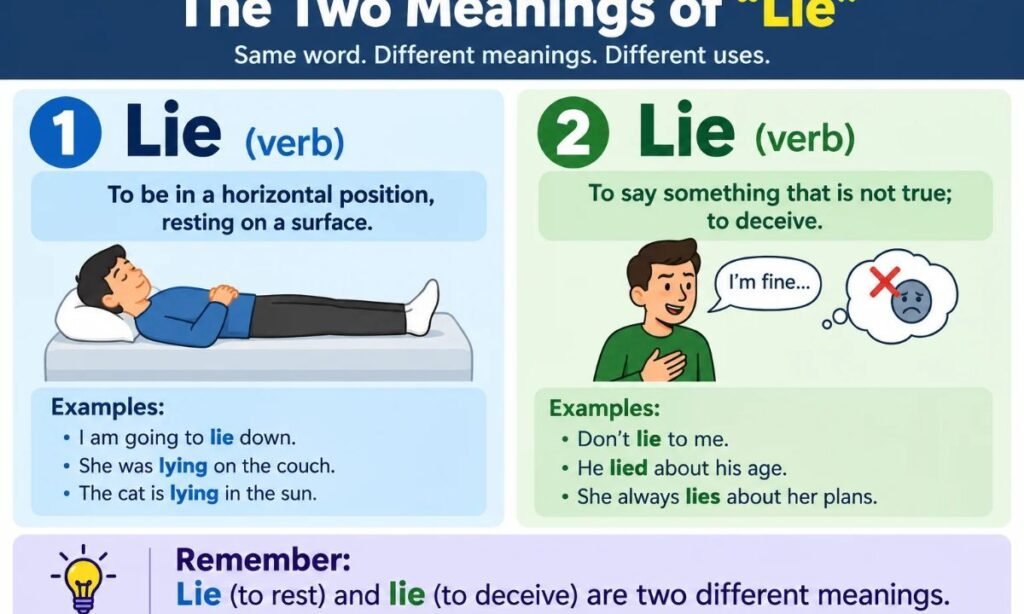
“Lie” is tricky because it has two separate meanings. Both use the spelling “lying,” but they work differently in a sentence.
Meaning 1: To rest in a flat position
- The cat is lying in the sun.
- I was lying in bed when the phone rang.
- The documents are lying on the desk.
Meaning 2: To say something untrue
- He was caught lying about his age.
- Why are you lying to me?
- Lying on a résumé can cost someone a job.
The spelling stays the same, but the past tense changes. That is where many people slip, so the next section covers it.
Verb Forms of “Lie” at a Glance
The two meanings of “lie” have different past forms. This table shows the difference.
| Meaning | Base form | Past | Past participle | -ing form |
| To recline | lie | lay | lain | lying |
| To tell a falsehood | lie | lied | lied | lying |
| To place something down (a different verb) | lay | laid | laid | laying |
Notice that the -ing form is “lying” for both meanings of “lie.” Only the past tense and past participle differ.
Example sentences:
- Yesterday, I lay on the couch for an hour. (recline, past)
- He lied about where he had been. (falsehood, past)
- She has lain awake all night. (recline, past participle)
Most speakers never use “lain,” but it is the correct form in formal writing.
Lying vs. Laying: What Is the Difference?
This is the biggest mix-up around the word, and it often shows up right next to the “lieing” mistake.
The key difference is that “lay” needs an object. You lay something down. You do not lay yourself down in standard English. You lie down.
| Word | Needs an object? | Example |
| Lying (from lie) | No | I am lying on the bed. |
| Laying (from lay) | Yes | I am laying the book on the bed. |
A quick test: ask “laying what?” If you can answer, use laying. If you cannot, use lying.
- Correct: The dog is lying on the floor.
- Correct: The hen is laying eggs.
- Incorrect: The dog is laying on the floor. (This is very common in casual speech, but it is nonstandard.)
How to Pronounce “Lying”
“Lying” is pronounced LY-ing. It has two syllables, and the first syllable sounds like the word “eye” with an “L” in front.
The pronunciation is the same for both meanings. Whether you are resting or telling a falsehood, you say it the same way.
This also explains the spelling. The “y” carries the long “i” sound. If you spelled the word “lieing,” the extra letters would look strange next to that sound, which is part of why the “y” form is the standard.
Similar Verbs That Follow the Same Rule
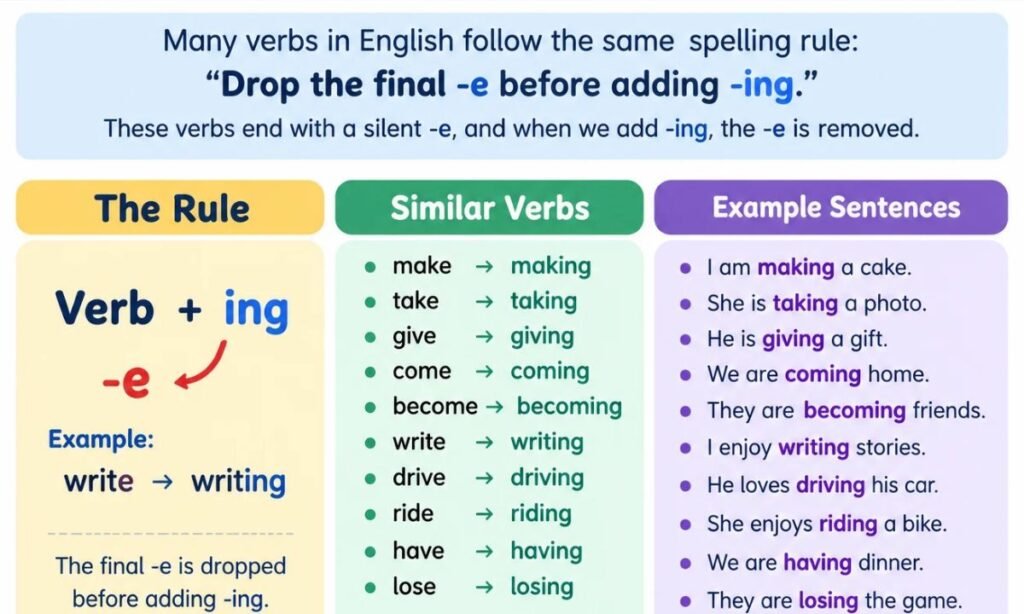
“Lie” is not alone. A handful of verbs share the same pattern, so learning one helps with the others.
| Base verb | Correct -ing form | Common mistake |
| lie | lying | lieing |
| die | dying | dieing |
| tie | tying | tieing |
| vie | vying | vieing |
One detail trips people up. The verb “dye” (to change color) is different. It keeps its “e” and becomes “dyeing” so it does not look like “dying.” Compare:
- The flowers are dying. (losing life)
- She is dyeing her hair blue. (changing color)
“Lying” in Real Sentences
Examples help the spelling stick, so here are a few for everyday situations.
Resting or positioned
- The kids were lying on the grass, watching clouds.
- A map was lying open on the table.
- After the long run, he spent the afternoon lying down.
Telling untruths
- She was lying to protect a surprise party.
- Lying under oath is a serious offense.
- Nobody likes a friend who keeps lying.
Common phrases
- Lying low means staying out of sight or avoiding attention. He is lying low until the news dies down.
- Lying in wait means hiding and waiting to surprise someone. The cat was lying in wait behind the door.
- Lying around means resting or doing nothing. We spent Sunday lying around the house.
- Lying awake means being unable to sleep. I kept lying awake, thinking about tomorrow.
Common Mistakes With “Lieing” and “Lying”
Most errors fall into a few predictable patterns.
| Mistake | Why it is wrong | Correct |
| lieing | The -ie ending should change to -y | lying |
| lye-ing | Not a standard form | lying |
| dieing | Same rule as lieing | dying |
| tieing | Same rule as lieing | tying |
| laying on the bed | “Lay” needs an object | lying on the bed |
| I lied on the couch | “Lied” means told an untruth | I lay on the couch |
| I have laid down | “Laid” needs an object | I have lain down |
The last two rows cause the most confusion. In casual conversation, many people say “I laid down for a nap,” and listeners understand. In formal writing, the standard form is “I lay down” or “I was lying down.”
Easy Ways to Remember the Spelling
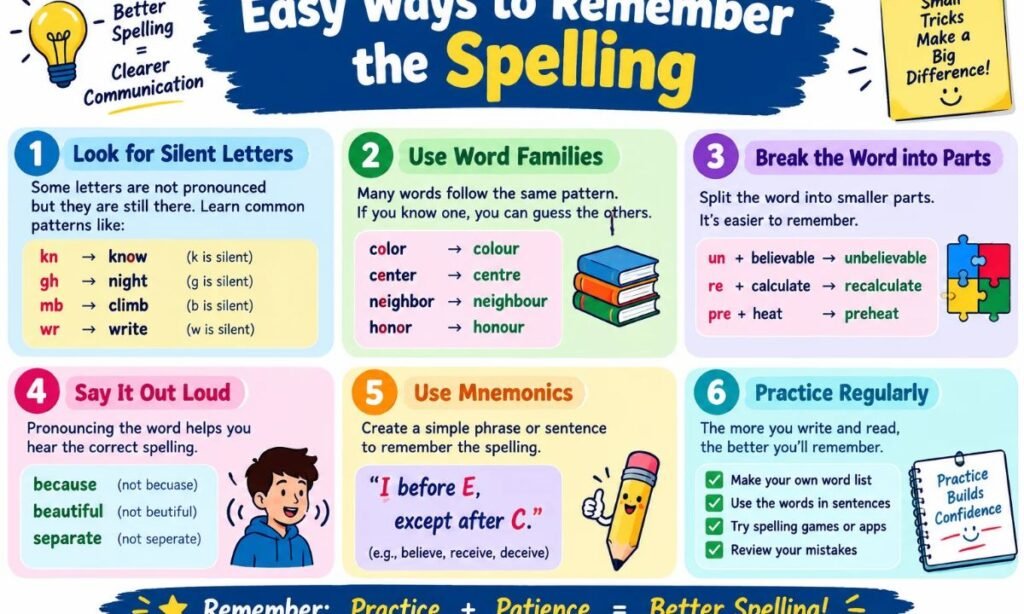
A few small tricks can help you get it right every time.
- Think “ie to y.” Whenever a verb ends in -ie, swap those two letters for y before adding -ing.
- Match it with “dying.” If you would never write “dieing,” you should not write “lieing” either.
- Check the letter count. “Lying” has five letters, and the “y” is the one in the middle that people forget.
- Say it slowly. “LY-ing” shows you the long “i” sound, which the “y” represents.
- Ask about the object. If a sentence needs “laying,” there should be something being placed.
FAQs
Is it spelled lying or lieing?
It is spelled lying. “Lieing” is not a real word. When “lie” takes the “-ing” ending, the “ie” becomes “y,” the same way “die” becomes “dying.”
Why is “lieing” wrong?
“Lieing” is wrong because English changes the “ie” in verbs like “lie,” “die,” and “tie” to “y” before adding “-ing.” This is a standard spelling rule that applies to every verb with that ending.
Is it laying or lying in bed?
Use lying in bed. You are resting yourself, and there is no object. Use “laying” only when you place something, as in “laying the blanket on the bed.”
What does “lying” mean?
“Lying” has two meanings. It can mean resting in a flat position, as in “lying on the floor.” It can also mean telling an untruth, as in “lying about the reason.” The spelling is the same for both.
Conclusion
The answer to “lieing or lying” is clear. Lying is correct, and “lieing” is a spelling mistake. The reason is a standard English rule: verbs that end in -ie change to -y before -ing.
Remember that “lying” works for both meanings of “lie,” whether you are resting or telling a falsehood. Keep it separate from “laying,” which needs an object, and your writing will stay clean and confident.