
You are typing a quick email, and you stop. Is it “don’ts or don ts”? You try one, it looks wrong, so you try the other, and now both look wrong.
That tiny gap between letters can make a polished sentence look careless, especially in a work document or a school rule list. The good news is that this has a clear answer, and it takes about a minute to learn. Here is exactly which form is right and why.
What Does “Don’ts” Mean?
“Don’ts” is a noun. It means things you should not do, or rules that tell you what to avoid. You will see it most often in the phrase “dos and don’ts.”
Think of it as a short way to say “prohibited actions” or “things to avoid.” A sign that lists what visitors must not do is a list of don’ts.
- Don’t (verb phrase): Don’t touch the wet paint.
- Don’ts (noun): The don’ts on this list are easy to follow.
So when you ask “what does don’ts mean,” the answer is simple: it is the plural noun for a set of “do not” rules.
Why the Apostrophe Belongs in Don’ts
The word starts as a contraction. “Don’t” is the shortened form of “do not.” When the two words merge, the letter “o” in “not” disappears, and the apostrophe marks the spot where it used to be.
Here is the pattern:
- do + not = don’t
- does + not = doesn’t
- did + not = didn’t
Because the apostrophe is part of the contraction itself, it must stay when you turn the word into a plural noun. That is why “don’ts” keeps the mark right in the middle. Remove it and the word loses its structure.
This is also why the apostrophe in “don’ts” is not a plural marker. Many people assume that an apostrophe means “possessive” or “plural.” Here it does neither job. It only shows missing letters. The final “s” is what makes the word plural.
Is “Don Ts” a Word?
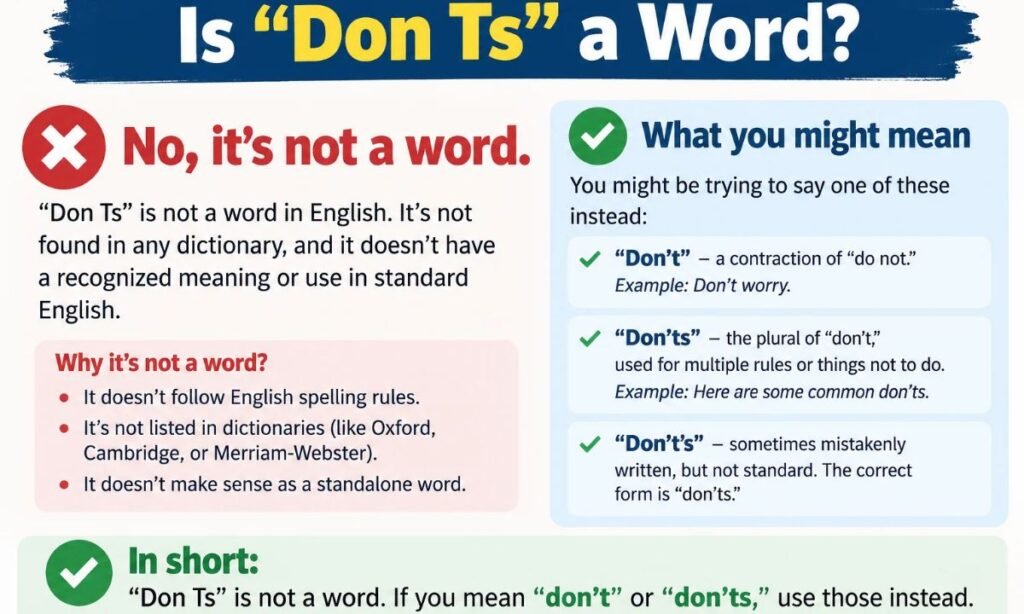
No. “Don ts” is not a word in standard English, and no major dictionary lists it. There is no meaning to look up because it is purely a spelling error.
So why does it show up so often? There are a few common reasons:
- Search habits: People often skip punctuation when they type into a search bar, so “don’ts” becomes “dont s” or “don ts.”
- Mobile keyboards: The apostrophe is hidden on a second keyboard layer, so many people skip it.
- Copy and paste problems: Some systems turn the curly apostrophe into a space or a strange symbol.
- Visual confusion: The word looks odd with an apostrophe followed by an “s,” so people try to “fix” it.
If you spot “don ts” in your own writing, replace it with don’ts and you are done.
Don’t vs. Don’ts: What Is the Difference?
These two forms look almost the same, but they do different jobs.
| Form | Part of speech | What it does | Example |
| Don’t | Contraction (verb) | Means “do not” | I don’t like spicy food. |
| Don’ts | Plural noun | Names a group of things to avoid | The don’ts are listed on page two. |
Here is a quick test. If you can swap the word for “do not,” use don’t. If you are naming a list of rules or warnings, use don’ts.
- Wrong: Don’ts forget your ticket.
- Right: Don’t forget your ticket.
- Wrong: Please follow the don’t on the sign.
- Right: Please follow the don’ts on the sign.
Dos and Don’ts or Do’s and Don’ts?
This is where writers get stuck, because you will see both versions in print. Here is the plain explanation.
“Don’ts” is settled. The only question is how to write the first half.
- Dos and don’ts: The cleaner, more common choice in modern style guides and editing. It treats “dos” as a normal plural noun.
- Do’s and don’ts: Also widely seen. Some writers add the apostrophe to “do’s” so it is not mistaken for the word “DOS” or the “do” in music.
Both are understood by readers. The best habit is to pick one and stay consistent across your document. If your workplace or school follows a specific style guide, follow that guide.
In this article, the form is dos and don’ts, because it is simpler and lines up with how most editors prefer it.
How to Use Don’ts in a Sentence
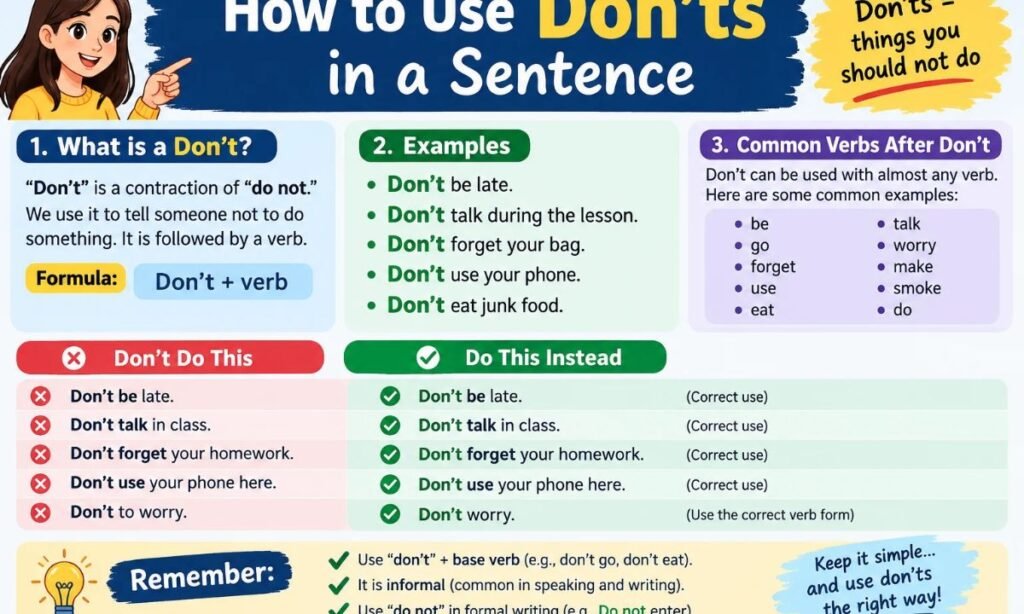
Using the word correctly is easy once you see it in context. The key idea is that “don’ts” works like any other plural noun, such as “rules” or “tips.”
Common patterns:
- The don’ts of [topic]: The don’ts of job interviews include arriving late.
- Dos and don’ts for [situation]: Here are the dos and don’ts for first-time travelers.
- A list of don’ts: She wrote a list of don’ts for new hires.
- Follow the don’ts: Please follow the don’ts listed below.
More example sentences:
- The coach shared a short list of dos and don’ts before the game.
- Every pool has don’ts posted near the entrance.
- My grandmother had a lot of don’ts when it came to the kitchen.
Notice that in every case, the word names a group of things. That is your clue that the plural noun is the right choice.
Don’ts Examples in Everyday Life
Seeing the word in real situations helps it stick. Here are practical examples you can borrow.
Email writing
- Do use a clear subject line.
- Don’t write in all capital letters.
Social media
- Do double-check a post before you share it.
- Don’t post private information about other people.
School rules
- Do raise your hand to speak.
- Don’t use your phone during tests.
Workplace etiquette
- Do arrive a few minutes early to meetings.
- Don’t interrupt a coworker who is speaking.
Travel advice
- Do keep copies of your documents.
- Don’t leave your bag unattended at the airport.
Each of these pairs shows why the phrase works so well. It gives readers a fast, balanced view of what to do and what to avoid.
Common Mistakes With Don’ts (and How to Fix Them)
Most errors come from the apostrophe, so here is a quick guide to the wrong forms you might see.
| Incorrect | Why it is wrong | Correct |
| don ts | Apostrophe replaced by a space | don’ts |
| dont’s | Apostrophe in the wrong place | don’ts |
| don’t’s | Extra apostrophe added | don’ts |
| dont | Apostrophe missing completely | don’t or don’ts |
| dos and dont’s | Misplaced apostrophe | dos and don’ts |
Here are a few extra points worth knowing:
- “Dont” without an apostrophe is common in texting. It is fine in casual messages, but not in formal writing.
- Do not use “don’t” for “doesn’t.” In standard English, we say “He doesn’t know,” not “He don’t know.” The second version appears in some dialects and in song lyrics, but it is considered nonstandard in formal writing.
- Do not confuse “don’ts” with “dont’s.” The apostrophe always sits after the “n,” right where the “o” was removed.
Is There a Difference Between American and British Spelling?
You may see claims online that American and British English spell this word differently. They do not. Don’ts is spelled the same way in the United States, the United Kingdom, Canada, and Australia.
The only real difference involves “dos and don’ts” versus “do’s and don’ts,” and that comes down to style preference, not national spelling rules. Some publishers lean one way, others lean the other.
For global audiences, the safest choice is dos and don’ts. It reads cleanly everywhere and avoids the extra apostrophe in “do’s.”
Easy Ways to Remember the Correct Form
If you want a memory trick, try these:
- Say it out loud. If you can hear “do not,” you need the apostrophe: don’t.
- Find the missing letter. The apostrophe replaces the “o” in “not.” Always put it there.
- Add the “s” last. Build the word in order: do not, don’t, don’ts.
- Picture a list. If you are talking about several rules, “don’ts” is your word.
One more tip: if the word looks strange to you, check whether the apostrophe is straight (‘) or curly (’). Both are acceptable, but your document should use the same style throughout.
Frequently Asked Questions
Which is correct, don’ts or don’t’s?
Don’ts is correct. The form “don’t’s” adds a second apostrophe that has no purpose. The first apostrophe already marks the missing letter, and the “s” alone makes the word plural.
What does “don’ts” mean?
“Don’ts” means things you should not do. It is a plural noun, and you will usually see it in the phrase “dos and don’ts,” which describes what to do and what to avoid in a given situation.
Is “don ts” a real word?
No. “Don ts” is not a real word. It is a common typing mistake caused by a missing apostrophe or a keyboard issue. The correct spelling is don’ts.
Should I write “dos and don’ts” or “do’s and don’ts”?
Both appear in print, but dos and don’ts is the cleaner, more common choice in modern writing. Whichever you pick, use it consistently throughout your document.
Conclusion
The answer to “Don’ts or Don ts” is clear: don’ts is correct, and “don ts” is a spelling mistake. The apostrophe stays because it marks the missing “o” from “do not,” and the final “s” turns the word into a plural noun. When you write about rules or warnings, “dos and don’ts” is the cleanest and most widely accepted phrase.
Keep three things in mind: place the apostrophe after the “n,” use “don’t” when you mean “do not,” and use “don’ts” when you are naming a list of things to avoid. Do that, and your writing will look sharp every time.