
You are halfway through a text when the word looks wrong. Wich or which? You stare at it, delete it, retype it, and now both versions look weird. That is normal, because the word sounds just like “witch,” so your ear gives no clue where the h goes.
Spelling by sound lets you down here. The good news is that one simple clue about the letters “wh” fixes the problem, and you can learn it in under a minute.
What Does “Which” Mean?
“Which” does three jobs, and all of them involve choosing or identifying something.
- To ask a question about a choice: “Which color do you want?”
- To point to a specific thing: “I can’t remember which key opens the door.”
- To add more information about something: “The meeting, which ran long, ended at six.”
Grammar books call these roles an interrogative (question) word and a relative pronoun (connecting word). You do not need the labels. Just remember that “which” always points back to a thing or a set of options, not to a person in standard use. For people, you would normally use “who.”
Why “Wich” Is Not a Word
“Wich” has no meaning as an English word on its own. It shows up for a few simple reasons.
- The sound hides the h. For most American speakers, “which” and “witch” sound the same. Your ear hears a plain “w,” so your fingers type a plain “w.”
- Typing speed. The “h” sits right after the “w,” and quick typing drops letters.
- Pattern confusion. Words like “wit” and “will” start with a plain “w,” so a short spelling feels natural.
- Skimming. “Wich” looks close enough that the eye slides past it.
None of this means you are bad at spelling. It means the word is a classic sound trap. The fix is knowing that “which” belongs to a family of words that all begin with “wh.”
Where “Which” Comes From
“Which” goes back to Old English, where it was written hwilc. The “h” originally came before the “w.” Over time, spelling flipped the order to “wh,” and that is the form we use now.
This history is a handy reminder. The “h” is not random. It is a leftover from the older spelling, and it is part of the word.
Many question words kept the same “wh” pattern: what, when, where, who, why, whose, whom. These words all ask something, which makes them easy to remember together.
Wich vs Which vs Witch
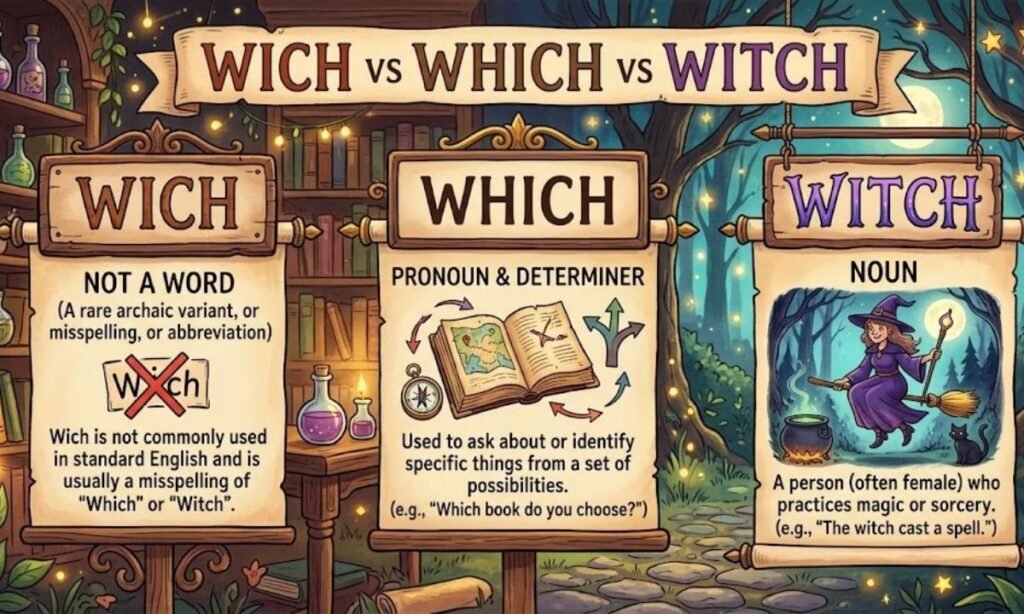
| Word | Correct? | Meaning | Example |
| which | Yes | A word for choosing or adding detail | “Which bus goes downtown?” |
| witch | Yes | A person in folklore or fantasy | “The witch stirred the pot.” |
| wich | No (not a standard word) | None | Do not use |
“Which” and “witch” sound the same in most American speech, which is why they get mixed up. They are called homophones. Remember that “which” belongs with the “wh” question words, and “witch” belongs with spooky stories.
How to Use “Which” Correctly
In questions
Use “which” when the choice comes from a known group or set.
- “Which dress should I wear?”
- “Which of these two routes is faster?”
- “Which do you prefer, tea or coffee?”
In the middle of a sentence
Use “which” to add information about something you already named.
- “My phone, which is two years old, still works fine.”
- “She chose the blue one, which surprised everyone.”
- “He didn’t say which train he took.”
When “which” adds extra detail that you could remove without changing the main idea, put a comma before it. That brings up a common question, covered next.
After a preposition
“Which” also pairs with words like “in,” “of,” “at,” and “for.”
- “The house in which I grew up is gone.”
- “There are three options, one of which is free.”
- “She missed the deadline, at which point we stepped in.”
Which vs That vs What
These three get swapped constantly. Here is a quick way to separate them.
Which vs that. In American style guides, that introduces information you need to understand the sentence (no comma). Which introduces extra information (with a comma).
- “The report that I wrote is on your desk.” (identifies which report)
- “The report, which I wrote last week, is on your desk.” (adds a detail)
British writers often use “which” in both cases, so you may see it either way. In US writing, following the “that / which with a comma” pattern looks cleaner.
Which vs what. Use which when the choices are limited or known. Use what when the options are open.
- “Which movie do you want to see?” (from a short list)
- “What movie do you want to see?” (any movie at all)
If you can picture a menu or a list, you want “which.”
Real Life Examples
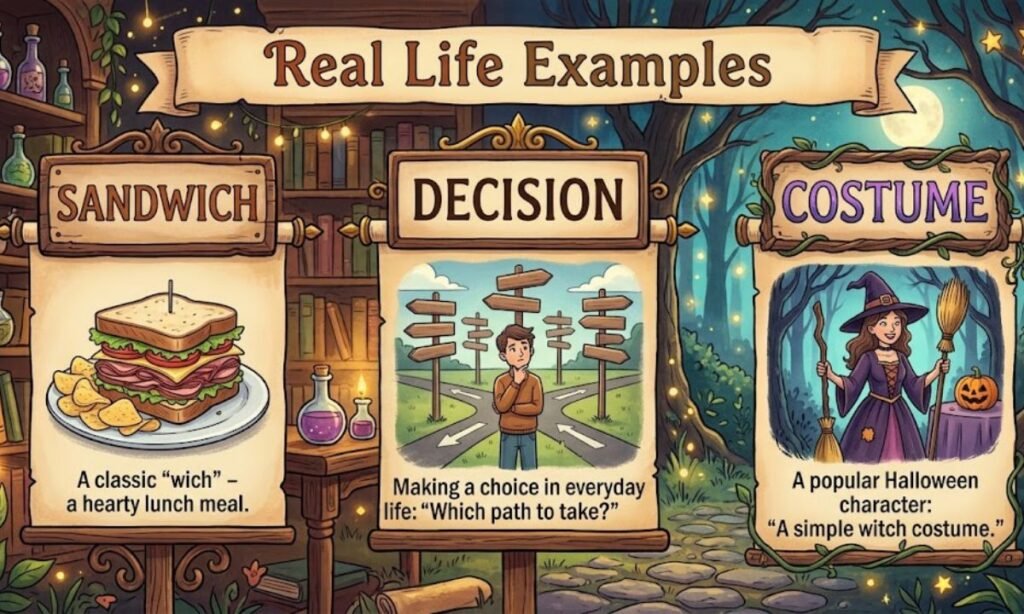
In emails
- “Could you tell me which day works best for you?”
- “I attached the contract, which needs your signature.”
In news headlines
- “Study finds which foods help most.”
- “Council lists which roads will close this week.”
On social media
- “Which one of you ate my leftovers?”
- “Can’t decide which movie to watch tonight.”
In daily conversation
- “Which way is the exit?”
- “I forgot which floor I parked on.”
In school writing
- “The author describes the storm, which changes the story.”
“Wich” in Place Names
Here is something most guides skip. You may spot “-wich” at the end of real names such as Norwich, Greenwich, Sandwich, and Ipswich. These are proper place names, and the ending is often traced to an old English word linked to a settlement or trading place.
That spelling is correct only inside those names. It does not mean “wich” is a word. It also does not follow the same sounds as “which.” In many British place names the ending is said quite differently from how it looks.
So if you see “-wich” on a map, that is a name. If you see “wich” alone in a sentence, it is a typo.
Common Mistakes to Avoid
1. Dropping the h.
- Wrong: “Wich one do you like?”
- Right: “Which one do you like?”
2. Mixing up “which” and “witch.”
- Wrong: “The which stirred the cauldron.”
- Right: “The witch stirred the cauldron.”
3. Using “which” for people.
- Wrong: “The teacher which helped me was kind.”
- Right: “The teacher who helped me was kind.”
4. Missing the comma before extra information.
- Wrong: “My laptop which is new broke.”
- Right: “My laptop, which is new, broke.”
5. Using “that” when you mean to ask.
- Wrong: “That one do you want?”
- Right: “Which one do you want?”
Memory Tricks and Practice
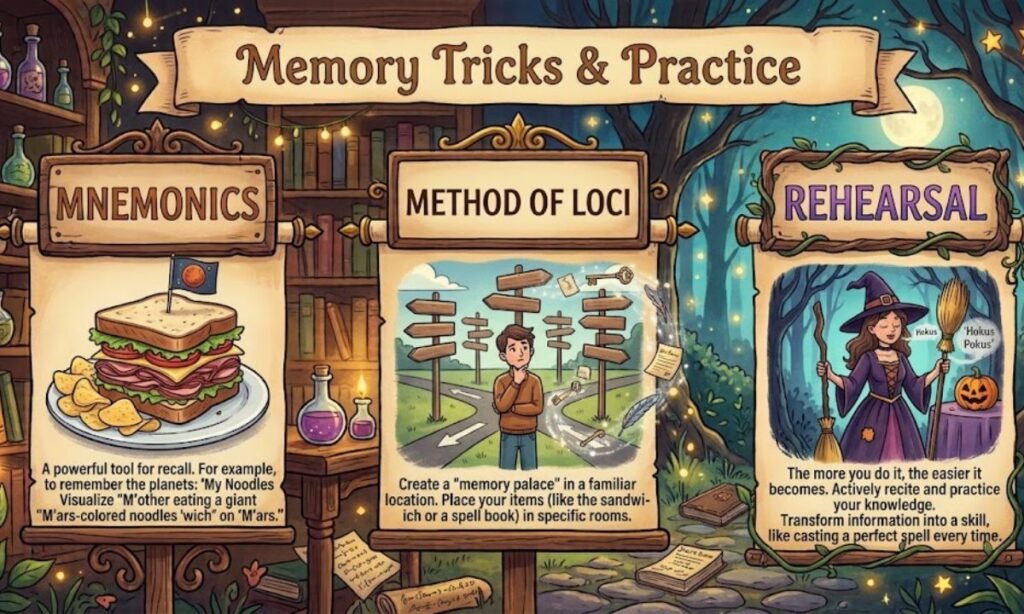
Pick the trick that works for you.
- The “wh” family trick. Which, what, when, where, who, and why all begin with “wh.” If it asks a question, it starts with “wh.”
- The extra h trick. Think of “which” as “w + h + ich.” Say it slowly: w-h-ich.
- The proofread trick. Search your draft for “wich” before sending anything. Every match is a typo unless it is part of a name like Norwich.
Now try these. Fill in the blank, then check your answers.
- (Wich / Which) road leads to the lake?
- He asked me (wich / which) shoes I liked.
- The cake, (which / witch) was homemade, vanished in minutes.
- The (which / witch) in the story was friendly.
- I took the bus (which / that) stops near my office.
Answers: 1. Which. 2. which. 3. which. 4. witch. 5. which or that, depending on your style. Use “that” if it identifies the bus, and “which” with a comma if it only adds detail.
Frequently Asked Questions
Is “wich” ever correct?
No. “Wich” is not a standard English word. The only correct spelling for the question and connecting word is “which.” The ending “-wich” appears in place names such as Norwich and Greenwich, but that is a separate case.
Why does “which” have an h?
The “h” is a leftover from Old English, where the word began with the letters “hw.” Over time the order changed to “wh.” The same pattern appears in other words like “what,” “when,” and “where.”
What is the difference between “which” and “witch”?
They sound the same for most speakers, but the meanings differ. “Which” is a question and connecting word. “Witch” is a noun for a person in folklore or fantasy.
Can I use “which” in formal writing?
Yes. “Which” is fully correct in essays, reports, and business emails. Just use it properly: with a comma for extra detail, and with “that” for essential detail in American style.
Final Thoughts
The answer to wich or which is clear: write which, with the “h.” “Wich” is a typo, and the sound of the word is what makes it easy to miss. Keep the “wh” question family in mind, read your drafts once for that one letter, and you will not second guess it again.
Pingback: Unphased vs Unfazed: Meaning, Difference & Correct Spelling